Published on:

Do you need to prove fault to start a divorce in Illinois? Divorce law in Illinois has changed dramatically in recent decades. For most of the state’s history, spouses seeking a divorce had to allege fault—adultery, cruelty, abandonment, or similar misconduct. That all changed with the 2016 amendments to the Illinois Marriage and Dissolution of Marriage Act (750 ILCS 5/), which made “irreconcilable differences” the sole ground for divorce in Illinois. This reform reshaped the legal process, emotional dynamics, and privacy expectations for families navigating dissolution.

The Move from Fault to No-Fault Divorce

From as early as 1874, Illinois law listed specific fault-based justifications for divorce. Each required proof, testimony, and often public disclosure of intimate details in open court. The process was emotionally taxing and socially charged. Lawmakers, concerned about divorce’s moral implications, even imposed a mandatory one-year waiting period in 1905 before remarriage could occur—two years if adultery was involved.

Published on:

The Landscape of Spousal Maintenance in Illinois

Illinois divorce law continues to evolve, particularly when it comes to spousal maintenance. Talk to Michael Roe at www.illinois-attorney.net if you have questions about spousal maintenance in Illinois.

The Purpose of Maintenance

Published on:

Valuing a Small or Medium-Sized Business in an Illinois Divorce

When a couple divorces in Illinois and one or both spouses own a business, determining the value of that business is an essential step in dividing marital property fairly. Illinois law treats closely held businesses as marital property to the extent they were created or grew during the marriage. The court must therefore determine the business’s fair market value as of or near the date of dissolution.

1. Common Valuation Methods in Illinois Divorces

Published on:

It’s the new year, and a client with a new case just filed emails me to understand what the next steps are in his/her case. Even though the case may feel brand new to a new litigant, financial disclosure comes up quickly. Illinois divorces typically require a Financial Affidavit, which details income, expenses, assets, and debts.

Encourage readers to start gathering:

  • Pay stubs and tax returns
Published on:

What is neurodivergence? 

Neurodivergent means in layman’s terms that a person’s brain works differently, including their processing of sensory input and output. Neurodivergent children may have conditions such as autism spectrum disorder, sensory processing disorders, apraxia, dyslexia, bipolar disorder, and attention deficient disorder. Neurodivergent people also tend to be visual thinkers and innovators, and they contribute significantly to our society.

Scientist, autism advocate, and best-selling author Temple Grandin wrote many books on her life experience as a neurodivergent person, which include stories about how challenging traditional school and day-to-day life was for her.9 Grandin emphasized the need for children to have hands-on learning experiences: “We need to be getting kids out working on real things. We got water systems falling apart, electrical wires falling out and causing fires. There’s all kinds of practical problems we need to be solving and visual thinkers are really good at that.”10

Published on:

Going through a divorce is undoubtedly one of life’s most challenging experiences, not only for you but also for your children. As a parent, your priority is ensuring your children feel secure, loved, and supported, even as your family dynamic shifts. In Illinois, where family law emphasizes the best interests of the child, maintaining stability and consistency during the divorce process is critical. This blog post offers practical tips for parenting through a divorce, helping you create a nurturing environment for your children during this transitional time.
Why Stability and Consistency Matter:
Children thrive on predictability. Divorce can disrupt their sense of normalcy, leading to feelings of confusion, anxiety, or insecurity. By prioritizing stability and consistency, you can help your children feel grounded, even as their world changes. Illinois courts often consider how parents support their children’s emotional and physical well-being when making decisions about parenting time and responsibilities, so your efforts to maintain a stable environment can also positively influence your case. Here are actionable strategies to support your children during the divorce process:
Published on:

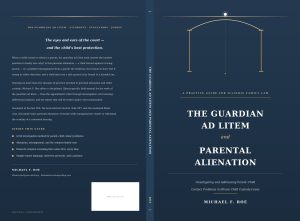
Many of our family law cases necessarily involve the appointment by the Court of a GAL or Child’s Representative. Sometimes, there is some question or confusion about the role of the GAL vs. that of the Child’s Rep.

In Illinois family law, under the Illinois Marriage and Dissolution of Marriage Act (IMDMA), a Guardian ad Litem (GAL) and a Child’s Representative are two distinct roles appointed by the court to represent the best interests of a child in family law proceedings, such as custody (allocation of parental responsibilities) disputes. While both roles focus on the child’s best interests, their functions, authority, and approach differ significantly. Below is a detailed comparison: Guardian ad Litem (GAL)

  • Definition: A GAL is an attorney or trained professional appointed by the court to investigate and advocate for the child’s best interests in a family law case. The GAL acts as the “eyes and ears” of the court, gathering information and making recommendations.
Published on:

The custody evaluator is a neutral, court-appointed professional (often a licensed psychologist) tasked with conducting an independent clinical evaluation to provide the court with objective information regarding the child(ren)’s best interests. Their role is to assess the family system dynamics, parenting abilities, and the child’s needs to make recommendations about:

  1. Allocation of Parental Responsibilities: This includes decision-making authority (e.g., education, healthcare, religion, extracurricular activities) and parenting time schedules.
  2. Best Interests of the Child: The evaluator focuses on factors outlined in 750 ILCS 5/602.5 (for decision-making) and 750 ILCS 5/602.7 (for parenting time), such as the child’s adjustment to home and community, the parents’ ability to cooperate, any history of abuse or neglect, and the child’s preferences (if age-appropriate).
Published on:

Understanding Dissipation of Marital Assets in an Illinois Divorce: In Illinois divorce cases, the concept of dissipation of marital assets can significantly impact the division of property.
            Dissipation refers to one spouse’s wasteful or improper use of marital assets for purposes unrelated to the marriage, often to the detriment of the other spouse. Understanding this concept is crucial for ensuring a fair division of property during divorce proceedings. Under Illinois law, specifically the Illinois Marriage and Dissolution of Marriage Act, marital assets are divided equitably, not necessarily equally.
blog_20241125173005-300x225
           Dissipation occurs when one spouse uses marital funds or property for uniquely personal benefit, unrelated to marital purposes, typically after the marriage has begun to break down irretrievably. Common examples include extravagant spending on items that are exclusive to the purchasing spouse (such as an expensive watch), gambling, funding an affair (travel, dinners, jewelry for a paramour), or transferring assets to hide them from the other spouse. For instance, if one spouse uses marital savings for lavish vacations or gifts to a third party after the marriage   deteriorates, this could be considered dissipation. 
Published on:

Why High-Conflict Divorces with a Narcissist Are So Difficult
Divorcing a narcissist is uniquely challenging, often escalating into high-conflict scenarios that drain emotional, financial, and mental resources. Narcissistic personality traits (NPD)—such as grandiosity, a need for admiration, and a lack of empathy—create a perfect storm of obstacles that make these divorces particularly difficult.
narcissists-are-high-conflict-personalities-300x225
Understanding why these situations are so difficult requires examining the narcissist’s behavior, their impact on the legal process, and the emotional toll on the other spouse. First, narcissists thrive on control and validation, which makes them resistant to compromise. In a divorce, where negotiation and cooperation are often necessary, a narcissist may view any concession as a personal defeat. They may prolong disputes over assets, custody, or minor details to maintain control or punish their spouse.
Contact Information