
Articles Posted in Child Custody

Published on:

Illinois Parenting-Time Changes After Reynolds: A New, Lower Standard for Modifying Parenting Time

Illinois parents seeking to change a parenting schedule have received an important clarification from the Illinois Supreme Court. In Reynolds v. Reynolds, the court held that a parent seeking to modify parenting time alone must show changed circumstances that make a change necessary to serve the child’s best interests, not a “substantial” change in circumstances.

That distinction matters. A request to adjust when a child stays with each parent may face a different legal threshold from a request to change significant decision-making responsibilities or other parts of a parenting plan. The particular relief requested, and how the motion is framed, can affect the standard the court applies.

Published on:

Preface

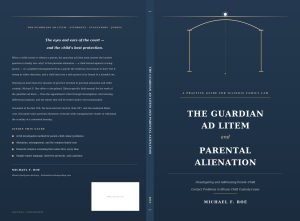
I have spent more than two decades of my practice focused, with some intensity, on the problem of parental alienation. In that time I have represented targeted parents and, in a smaller number of cases, parents accused of alienating conduct. I have been retained as a consulting and testifying expert on the subject of parental alienation, and I was one of the attorneys connected to In re Marriage of Bates, the Illinois Supreme Court case that remains a landmark in this field. I say all of this not to establish authority for its own sake, but to be candid with the reader about the vantage point from which this book is written. The majority of the data and narrative in this book derives from the decades of posts that I have written in my Illinois Divorce Lawyer Blog.

GAL_Cover_Wrap-300x221
This is a practice guide, and its intended reader is the guardian ad litem — the attorney appointed under Section 506 of the Illinois Marriage and Dissolution of Marriage Act to investigate the facts of a case, interview the child and the parties, and report to the court in the best interests of the child. It is also written with child representatives, attorneys for the child, family-law practitioners, evaluators, and judges in mind, because the guardian ad litem never works in isolation. But the organizing question of every chapter is the practical one that a guardian ad litem must answer: what do I actually do when a case lands on my desk with allegations that one parent is turning a child against the other?

Published on:

For 15 years I have written a nationally recognized Family Law blog at www.illinoisdivorcelawyerblog.com, focusing on complex subjects including Parental Alienation in Illinois child custody cases. Drawing from these blog posts and my research as a longstanding member of Parental Alienation Study Group , this concise book is now available on Amazon. My hope in working on this book is that this book will be a helpful resource for all family law professionals in understanding the phenomenon of child estrangement and alienation in family systems and family law cases.
“I take parental alienation seriously as a real and damaging phenomenon. I have watched it destroy relationships between loving parents and their children, and I have watched it inflict lasting harm on the children themselves.”
Amazon Link:
Published on:

Questions for Michael Roe about Illinois Child Support? Here’s a quick summary of the application of overnight calculations that affect actual child support. 

Recent changes to Illinois divorce law have reshaped how courts handle child support calculations when parents share parenting time almost equally. These updates reflect the state’s ongoing efforts to align financial responsibility with actual time spent with children, a critical issue in modern family law.

Illinois courts determine child support under the Income Shares Model codified at 750 ILCS 5/505. This model allocates support based on each parent’s income and the proportion of time the child spends with them. The 2023 amendments to the Illinois Marriage and Dissolution of Marriage Act clarified that when each parent has the child for at least 146 overnights per year, the “shared parenting” formula must be applied, adjusting both parents’ obligations proportionally.

Published on:

What is neurodivergence? 

Neurodivergent means in layman’s terms that a person’s brain works differently, including their processing of sensory input and output. Neurodivergent children may have conditions such as autism spectrum disorder, sensory processing disorders, apraxia, dyslexia, bipolar disorder, and attention deficient disorder. Neurodivergent people also tend to be visual thinkers and innovators, and they contribute significantly to our society.

Scientist, autism advocate, and best-selling author Temple Grandin wrote many books on her life experience as a neurodivergent person, which include stories about how challenging traditional school and day-to-day life was for her.9 Grandin emphasized the need for children to have hands-on learning experiences: “We need to be getting kids out working on real things. We got water systems falling apart, electrical wires falling out and causing fires. There’s all kinds of practical problems we need to be solving and visual thinkers are really good at that.”10

Published on:

Going through a divorce is undoubtedly one of life’s most challenging experiences, not only for you but also for your children. As a parent, your priority is ensuring your children feel secure, loved, and supported, even as your family dynamic shifts. In Illinois, where family law emphasizes the best interests of the child, maintaining stability and consistency during the divorce process is critical. This blog post offers practical tips for parenting through a divorce, helping you create a nurturing environment for your children during this transitional time.
Why Stability and Consistency Matter:
Children thrive on predictability. Divorce can disrupt their sense of normalcy, leading to feelings of confusion, anxiety, or insecurity. By prioritizing stability and consistency, you can help your children feel grounded, even as their world changes. Illinois courts often consider how parents support their children’s emotional and physical well-being when making decisions about parenting time and responsibilities, so your efforts to maintain a stable environment can also positively influence your case. Here are actionable strategies to support your children during the divorce process:
Published on:

Many of our family law cases necessarily involve the appointment by the Court of a GAL or Child’s Representative. Sometimes, there is some question or confusion about the role of the GAL vs. that of the Child’s Rep.

In Illinois family law, under the Illinois Marriage and Dissolution of Marriage Act (IMDMA), a Guardian ad Litem (GAL) and a Child’s Representative are two distinct roles appointed by the court to represent the best interests of a child in family law proceedings, such as custody (allocation of parental responsibilities) disputes. While both roles focus on the child’s best interests, their functions, authority, and approach differ significantly. Below is a detailed comparison: Guardian ad Litem (GAL)

  • Definition: A GAL is an attorney or trained professional appointed by the court to investigate and advocate for the child’s best interests in a family law case. The GAL acts as the “eyes and ears” of the court, gathering information and making recommendations.
Published on:

Many of our clients have initial questions about how the major decisions for the minor children will be made after the divorce is completed. While joint decision making is conceptually ideal, in many cases requiring the parties to make major decisions together can create disagreements, leading to further litigation. In some cases, a major decision like religion is not at issue but matters like the children’s extracurriculars and medical/dental or therapy treatments often create discord among parents.  How does the Court assess whether to award a parent joint or sole decision making for the children?

1-a-sole-vs-joint-custody-645-300x119
The court determines whether to grant sole or joint decision-making responsibility (previously referred to as custody) for minor children based on the best interests of the child, as outlined in the Illinois Marriage and Dissolution of Marriage Act (750 ILCS 5/602.5). The court evaluates several specific criteria to decide whether one parent should have sole decision-making authority or if both parents should share joint decision-making responsibility. Below are the key factors and considerations:

The court often considers the following factors to determine what arrangement serves the child’s best interests:

Published on:

The question of child support seems to be a basic question, but one that sometimes causes confusion. It used to be some years ago that the noncustodial parent was obligated to pay child support to the parent with the “primary custody of the child or children.”  Illinois has largely done away with old concepts of child custody and child support, and now centers its laws on allocating more equally the parenting time of the children, and setting support such that both parents’ incomes are factored in.

Child support is now calculated using an “income shares” model, which considers both parents’ incomes and the number of children. The key factors in determining child support include:

1. Determining Both Parents’ Net Incomes

Contact Information